Category: blog

How do muslims celebrate eid ul fitr

How do muslims celebrate eid al fitr

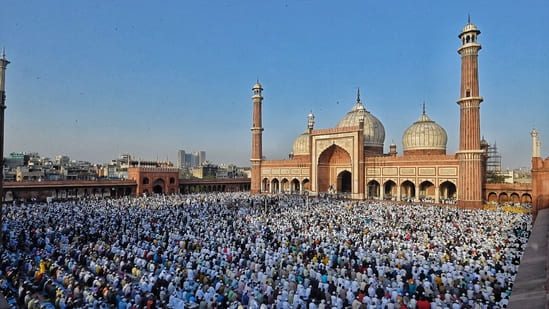
As Ramadan comes to an end, Eid ul-Fitr ushers in a time of joy, togetherness, and gratitude for the completion of fasting. It is a day of renewal and celebration, a time when hearts overflow with warmth and communities unite in a common spirit of joy. Eid is more than just a festive event; it mirrors the values of unity, generosity, and faith, forging stronger connections among family, friends, and neighbors. How do Muslims celebrate Eid ul-Fitr? Around the globe, this unique day is honored through traditions that highlight both cultural variety and a collective spirit of delight. Whether near or far, wherever it’s celebrated, Eid stands as a moment of peace, kindness, and thankfulness, recalling its profound significance that goes beyond the mere festivities.

What is Eid al-fitr?

Eid ul-Fitr, often called the “Festival of Breaking the Fast,” marks the end of Ramadan, a period when Muslims express their thanks to Allah for granting them the strength to fast. This festival carries profound religious significance, as it was described by Prophet Muhammad (PBUH) as a special day for celebration and generosity. A vital aspect of Eid is the tradition of Zakat al-Fitr, a charitable offering extended to those less fortunate, making sure that everyone can partake in the joy of the event.

When is Eid al-fitr?

Unlike fixed-date holidays, Eid ul-Fitr is on the Islamic lunar calendar so the exact date varies annually and is determined by moon sighting, with various nations celebrating on slightly different dates. It officially starts on the first day of Shawwal, the month following Ramadan.

How do people celebrate Eid al fitr: preparations for Eid

The preparations for Eid start a few days before, bringing a glow of excitement and a feeling of spiritual renewal along with it. Some of the universal practices are:

  • Shopping for new clothes and gift items preceding Eid for oneself and others.
  • Giving Zakat al-Fitr so that the poor can also join in the celebrations.
  • Special preparations related to food items include sweets and traditional dishes shared with family members and also neighbors.

How do muslims celebrate Eid ul fitr in different countries 

Eid ul-Fitr is a worldwide festival that brings Muslims together in shared faith and thankfulness. However, the specific traditions and customs surrounding it differ greatly from one culture to another. Although the essential components, such as prayers, giving to charity, enjoying feasts, and spending time with loved ones, stay constant, each nation imbues these practices with its own distinctive flair, influenced by its history, culinary traditions, and regional customs.

How do they celebrate Eid al fitr in Britain and North America

Eid ul-Fitr is a vibrant and happy celebration in both Britain and North America, showcasing the diverse array of Muslim cultures present. As the festival nears, markets are filled with elaborate henna patterns, stunning traditional outfits, and all sorts of items for those who are still shopping. On the big day itself, huge numbers of people come together in mosques, parks, and conference halls to offer prayers. Following this, families and friends reunite, swap presents, and donate. Public Eid celebrations in cities such as London and Toronto add to the festive atmosphere, with food stalls, carnival rides, and cultural performances bringing the community together. Even though it’s not an official public holiday, many Muslims take time off to partake in the festivities, with some schools and workplaces offering accommodations. 

How do you celebrate Eid ul fitr if in an Arab country?

Eid ul-Fitr is a special time across Arab nations, marked by family coming together, incredible generosity, and happy traditions. The first day begins with the Eid prayer, a time when communities unite in mosques or open areas to give thanks. Following these prayers, families unite for festive meals and special sweets prepared just for Eid. A beloved custom is Eidiya (عيدية), where elders generously give money to children and younger relatives as a sign of love and blessings. The festivities go on with visits to relatives, gift exchanges, and welcoming guests, strengthening family and community ties. Throughout the day, charity and a spirit of generosity are at the heart of it all, making sure everyone, including those in need, can enjoy the happiness of Eid.

Eid ul-fitr during the time of the Prophet Muhammad

The very first Eid celebrations trace back to the time of Prophet Muhammad (peace be upon him), around 624 AD, following the pivotal victory at the Battle of Badr, a major win for the early Muslim community. His Sunnah leads us to know that:

  • Eid is meant to be a day when we come together as one, filled with happiness and a generous spirit.
  • It is not showing off but simple acts of kindness and modesty count for far more than great displays.
  • The Prophet (peace be upon him) urged us to make an effort to visit our families, share food, and ensure that everyone feels included on this special day.

The Spirit of Giving & Community Bonding

Eid ul-Fitr’s spirit of giving and spreading joy is among its most lovely features. In order to ensure that nobody feels forgotten or alone, it is a time of kindness, giving, and fostering social bonds.

Muslims around the world embrace this spirit in many ways:

  • Greeting relatives and exchanging warm greetings: The phrase “Eid Mubarak” (Blessed Eid) is exchanged with affection between relatives, friends, neighbors, and even strangers as a symbol of oneness and peace.
  • Giving gifts to children and the needy: Gifts are given by most families, and elder members typically give Eidi (gift money) to juniors as a sign of love.
  • Hosting or attending Eid gatherings: Homes are filled with laughter and delicious food as families and friends come together for grand feasts and celebrations.
  • Charity giving: Eid is all about acts of kindness. Numerous Muslims take it a step further by feeding the poor, donating, or going to visit the sick and elderly. The aim is to make sure that everyone, no matter their financial situation, can join in the celebration of Eid.
  • Reconnecting: Eid is also a time for forgiveness. Many people use this occasion to mend relationships, apologize for past misunderstandings, and strengthen bonds with their loved ones.

Eid Prayer & Morning Rituals

The day of Eid begins early, filled with beautiful rituals that reflect gratitude and faith.

Sunnah Practices on Eid Morning:

  • Taking a bath (ghusl) prior to the prayer.
  • Wearing the newest or finest clothing.
  • Before going to the mosque, eat some dates.
  • Praising Allah by saying “Allahu Akbar, Allahu Akbar (Takbir).
  • Performing the special Eid prayer in large congregations.

The Eid Prayer: how to do eid al fitr prayer

Muslims gather at mosques or public places for a unique Eid prayer, which is two units of prayer (rak’ahs) followed by a sermon. This prayer reinforces the solidarity of faith and community.

Noor Institute: Learn Islam beyond Eid

Eid ul-Fitr is a time to celebrate faith, but understanding Islam is a lifelong journey. Noor Institute opens a special door to enrich your understanding of Islam with well-crafted classes covering Islamic studies, Quran recitation, and the Arabic language.  With flexible online islamic courses, you can form a more profound bond with your faith, a clearer insight into the Quran, and a greater respect for Islamic customs. By making religious learning both accessible and engaging, Noor Institute helps ensure that exploring Islam becomes a constant and rewarding adventure, extending far beyond the festive season.

Conclusion 

Eid ul-Fitr is a time of faith, thankfulness, and solidarity that unites Muslims worldwide. It is more than just a holiday. Even though customs differ, the essence of Eid is always the same: feasts, prayers, charitable deeds, and joyful gatherings that foster community and faith. Understanding how do muslims celebrate Eid ul-Fitr across different cultures reveals the festival’s rich diversity while emphasizing its universal values of togetherness, generosity, and family.

Frequently asked questions 

  • When is Eid ul-fitr 2025?

​Eid ul-Fitr in 2025 is expected to be celebrated on Sunday, March 30, 2025, subject to the sighting of the moon.

  • Is there an Eid holiday in the UK?

In the United Kingdom, Eid ul-Fitr is not a public holiday; businesses and schools typically operate as usual.

Zakat al-Fitr 2026: Complete Guide to Rules, Amount & Who Should Pay

Zakat al-Fitr 2026: Complete Guide to Rules, Amount & Who Should Pay

Zakat al-Fitr is more than an obligation; it is an expression of compassion, gratitude, and unity. It ensures that every Muslim, regardless of their circumstances, can celebrate Eid al-Fitr with dignity and joy. Unlike other forms of charity, this special act of giving is deeply connected to the soul, serving as a means of purifying one’s fast while uplifting those in need. Understanding what is zakat al-fitr allows us to see it not just as a duty, but as a powerful reminder of the generosity and communal spirit that Islam so beautifully nurtures.

Understanding what is zakat al fitr in Islam

Zakat al-Fitr, also known as Sadaqat al-Fitr, is a form of charity that is obligatory for every Muslim, male or female, who has the financial means to give. It is a mandatory donation that must be given before Eid al-Fitr to help those in need and to purify the giver’s wealth.

This duty applies to any Muslim whose total assets plus non-essential items, and after deducting liabilities (debts), reach or exceed the required amount for zakat.

Additionally, a father or the head of the household is responsible for paying Zakat al-Fitr on behalf of their young children if they do not possess enough wealth to give it themselves. However, if a child has their own wealth meeting the required amount, they should pay their own Zakat al-Fitr


zakat al fitr hadith

Prophetic Hadiths

Ibn Abbas (RA) said:

“فرض رسول الله ﷺ زكاة الفطر طهرة للصائم من اللغو والرفث، وطعمة للمساكين، من أداها قبل الصلاة فهي زكاة مقبولة، ومن أداها بعد الصلاة فهي صدقة من الصدقات”

“The Messenger of Allah ﷺ prescribed Zakat al-Fitr as a purification for the fasting person from idle talk and immoral acts, and as food for the needy. Whoever gives it before the prayer, it is accepted; whoever gives it after, it is considered ordinary charity.”

Narrated by Bukhari & Muslim⁠�

Ibn Umar (RA) said:

“فرض رسول الله ﷺ زكاة الفطر صاعاً من تمر، أو صاعاً من شعير على العبد والحر والذكر والأنثى، والصغير والكبير من المسلمين، وأمر بها أن تؤدى قبل خروج الناس إلى الصلاة”

“The Messenger of Allah ﷺ made Zakat al-Fitr one sa’ of dates or barley for every Muslim – slave or free, male or female, young or old – and ordered it to be given before the people go to prayer.”

The difference between Zakat and Zakat al-Fitr

Normal zakat and zakat al-fitr differ in amount, time of paying and eligibility.

What is zakat in Ramadan?

Zakat is a form of charity and one of the Five Pillars of Islam, established through the Qur’an, Sunnah, and scholarly consensus. It is a specific amount of wealth that must be given to the poor and those in need, under certain conditions.

Zakat is obligatory for those who meet the required conditions and possess the minimum amount of wealth (Nisab). It is collected from the wealthy and distributed among eligible recipients.

During Ramadan, many Muslims choose to give their Zakat, as this blessed month emphasizes generosity and compassion, and the rewards for good deeds are multiplied.

Since Zakat is deeply rooted in the Qur’an, enrolling in Quran online classes can help you gain a deeper understanding of its significance, ensuring you fulfill this obligation with knowledge and sincerity.

Key differences between zakat and zakat al-fitr

  • Eligibility: One key difference between Zakat and Zakat al-Fitr is eligibility. Zakat is only required for those whose wealth exceeds the Nisab (minimum amount), whereas Zakat al-Fitr must be paid by all Muslims, regardless of age, as long as they have the financial means. However, if a person genuinely does not have enough wealth to meet the required amount, they are exempt and may even be eligible to receive Zakat al-Fitr or Zakat themselves.
  • Amount: The amount of zakat al-fitr is significantly less than zakat as it is meant to be paid by all muslims. The amount varies by region, but it is generally equivalent to the cost of a staple food item. In contrast, if a person’s wealth satisfies the necessary minimum quantity (Nisab) and has been retained for a full lunar year, Zakat is computed as 2.5% of their net savings, which includes cash, gold, silver, and investments.
  • Timing: The third key difference between Zakat and Zakat al-Fitr is their due date. Zakat is an annual obligation and becomes due once a Muslim’s wealth has met the required amount (Nisab) for a full lunar year. Each person has their own ‘Zakat anniversary’ based on when their wealth first met the Nisab. In contrast, Zakat al-Fitr is directly linked to Ramadan and must be paid before the Eid al-Fitr prayer. Unlike Zakat, which has flexibility in timing, Zakat al-Fitr has a strict deadline that all Muslims must follow.

What is the rule of zakat al-fitr?

Zakat al-Fitr is a mandatory charity that every Muslim must pay before Eid al-Fitr, provided they have the financial means to do so. It is an obligatory act of worship and one of the Islamic duties associated with Ramadan.

  • Time

Zakat al-Fitr becomes obligatory at sunset on the final day of Ramadan. Anyone who is alive and financially capable at that time must pay it. If someone gets married, has a child, or converts to Islam before the sun sets, they must also pay Zakat al-Fitr for themselves and their new dependents. However, if these events occur after sunset, they are not required to pay it for that year. If a person passes away after sunset, their Zakat al-Fitr must still be paid on their behalf.

The payment of Zakat al-Fitr should be made before the Eid prayer. According to the words of Prophet Muhammad in hadith. If paid after the Eid prayer, it won’t be considered as Zakat al-Fitr but an ordinary voluntary charity (sadaqah). For it to reach needy ones in time, giving it one or two days before Eid is permissible.

  • Types

Zakat al-Fitr should be given as the usual staple food in the area. The Prophet Muhammad (peace be upon him) specified one saa’ of food like dates, wheat, barley, raisins, or dried yogurt (aqit) (Al-Bukhari, 1408). Scholars have since broadened this to include other staple foods such as rice, corn, or lentils, to make sure it gives nourishment to those who need it.

Some items are not valid for Zakat al-Fitr, such as meat, fish, eggs, and perishable foods, as they are not stable long-term sources of nourishment. Additionally, food that is not a regional staple is generally not accepted.

  • Calculation 

Zakat al-Fitr requires one saa’, a volume-based metric that dates back to the Prophet’s time. Since food densities vary, a saa’ is approximately 2.5 to 3 kg of staple food. Food providers need to make sure the right weight is reached.

If you’re giving money (where it’s permitted), the amount should be equivalent to the price of one saa’ of basic food in the local market. Since food prices vary, it is advisable to consult local Islamic authorities or mosques for the recommended value.

Why do people pay sadaqat al-fitr?

Benefits of paying zakat: 

  • Cleanses the fasting person from idle talk and foul speech during Ramadan.
  • Serves as an act of worship, seeking Allah’s forgiveness and mercy.
  • Ensures that those in need can enjoy Eid without hardship.
  • Encourages Muslims to give charity and care for others.
  • Strengthens compassion and social responsibility within the community.
  • Reduces poverty and bridges the gap between rich and poor.
  • Strengthens social bonds by fostering harmony and mutual care.
  • Considered an investment in the hereafter, earning Allah’s favor.
  • Helps build gratitude and appreciation for one’s own blessings.

The proper way to fulfill sadaqat al-fitr

The Prophet Muhammad (peace be upon him) said, “Muslims must pay Zakat al-Fitr for themselves and all members of their household, including infants and young children.”

Before donating Zakat al-Fitr, one should determine first how much to give. The donation is either in kind as food or cash equivalent and typically equal to a day’s supply of food for one person. It is highly recommended that Zakat al-Fitr is given before Eid al-Fitr so the poor can use it during the celebration.

Zakat al-fitr distribution: rules and best practices

It is advised that the individual giving Zakat al-Fitr distribute it himself instead of depending on a collector. Al-Shaafa said, “I would prefer to distribute Zakat al-Fitr myself rather than give it to the person collecting it.”. Al-Majmoo, section 6

Al-Nawawi (may Allah be merciful to him) upheld this view, stating that while it is permissible to give Zakat al-Fitr to the collector or Muslim authority responsible for its distribution, it is better for the individual to distribute it himself, particularly to relatives who are needy but not dependent.

If someone can’t hand out their Zakat al-Fitr personally, they’re allowed to ask a reliable person to do it for them. But, it’s a bad idea to give it to someone you can’t trust, or just leave it somewhere random. Ibn Abi Mulaykah even warned against this, as there’s a chance it might not get distributed the right way.

Where to distribute zakat al-fitr?

Zakat al-Fitr should be given out in the same country where you become obligated to pay it, even if your wealth is somewhere else. As Ibn Qudaamah (may Allah have mercy on him) pointed out, this duty is connected to where you are, not where your money is. Imam Maalik agreed, saying that if you’re traveling, you should still give your Zakat al-Fitr where you are on Eid day. But it’s also acceptable if your family back home handles it for you. This way, the poor and needy where you are can benefit, which is the whole point of Zakat al-Fitr.

Ruling on giving zakat al-fitr in cash

The ruling on giving Zakat al-Fitr in cash is a subject of scholarly debate. The majority of scholars, including those from the Maliki, Shafi’i, and Hanbali schools, hold that Zakat al-Fitr should be given in the form of staple food, just like the Prophet Muhammad (peace be upon him) did. They argue that the primary purpose of this charity is to provide food for the needy on the day of Eid, ensuring that no one goes hungry. However, the Hanafi school permits giving Zakat al-Fitr in cash, reasoning that monetary assistance may sometimes be more beneficial for the poor, allowing them to buy what they need most. Some contemporary scholars and fatwas also support this view, especially in societies where food distribution is less practical. Ultimately, while the safest option is to follow the traditional method of giving food, giving cash may be acceptable in cases where it better serves the needs of the recipients.

How to expand and strengthen your Islamic knowledge

Gaining a deeper understanding of Islam is a lifelong journey that enriches the heart and mind, bringing one closer to Allah. Among the best ways to increase your knowledge about Islam are authentic and well-organized educational programs.

This is where Noor Institute comes in. They offer complete online Islamic courses designed to help everyone, no matter their background, dive deeper into studies of the Qur’an, Hadith, Fiqh, Tafsir, the Arabic language, and so much more. Their courses are crafted to suit students at various levels, providing a dynamic and engaging learning journey with seasoned scholars and instructors. The convenience of online learning allows students to study at their own pace, access high-quality Islamic education from anywhere in the world, and receive guidance from knowledgeable instructors.

By joining Noor Institute’s programs, you can enhance your understanding of Islamic principles, strengthen your bond with the Qur’an, and learn how to apply Islamic teachings in your life.

Conclusion

In conclusion, understanding what is Zakat al-Fitr is important to ensure it is given correctly and on time. Unlike regular Zakat, which is based on accumulated wealth, Zakat al-Fitr is a fixed amount due from every Muslim who has sufficient means, meant to purify the fast and support the needy before Eid al-Fitr. It is best given in the form of staple food or its equivalent in cash, preferably before the Eid prayer, and should be distributed locally whenever possible.

To deepen your understanding of Zakat al-Fitr and other key Islamic obligations, Noor Institute offers comprehensive islamic courses designed for learners of all levels. 

Join Noor Institute today and expand your knowledge of Islam.

FAQs

1. What is Zakat al-Fitr & its amount?

Approximately 2.5 kg of staple food per person or its cash equivalent.

2. Can Zakat be delayed after Eid prayer?

No, it becomes ordinary charity if delayed. If delayed for unavoidable reasons, it should be given as soon as possible.

3. Is Zakat al-Fitr obligatory for children?

Yes, guardians pay on behalf of their children.

4. Can Zakat al-Fitr be paid in cash?

Scholars differ. Cash is allowed if it benefits the needy more effectively; otherwise, food is preferred.


Learn Zakat al-Fitr with Noor Institute

Want to fully understand Zakat al-Fitr and zakat rules in a practical way? Join Noor Institute courses today to access interactive videos and study materials. Learn the correct methods of giving Zakat and explore more resources from Islamic centers online:

How to Finish Quran in Ramadan Easily: A Powerful 30-Day Plan

How to Finish Quran in Ramadan Easily: A Powerful 30-Day Plan

Ramadan, the month in which the Quran was revealed, holds a special place in the hearts of Muslims. As Allah says in the Quran, “The month of Ramadan [is that] in which the Quran was revealed.” (Surah Al-Baqarah). This beautiful link between Ramadan and the Quran makes it the ideal time to strengthen our bond with Allah’s words.

A common goal is learning how to finish the Quran in Ramadan, a task that offers not only spiritual reward but also an opportunity for growth and transformation. With a good plan and strong dedication, this holy month can become a wonderful journey of both reading and thoughtful reflection, helping you to read the whole Quran while also deepening your understanding and your connection to its eternal message.

Ramadan: The Holy Month in Which the Quran Was Revealed

Ramadan holds a unique and cherished position in the hearts of Muslims, recognized as the sacred month intrinsically linked to the Quran. It was within this blessed period that the Quran was revealed to Prophet Muhammad (PBUH) by the Angel Jibreel. This divine transmission commenced on the Night of Decree (Laylat al-Qadr), a night of paramount importance throughout Ramadan. The bond between Ramadan and the Quran runs profoundly deep, rendering this month not solely a period of fasting, but also a valuable chance for Muslims to enrich their connection with the Quran via recitation, contemplation, and comprehension. This sacred bond elevates Ramadan to a time of spiritual enhancement and unwavering devotion.

How to Finish Quran in Ramadan

Reading vs understanding: what is more important in Ramadan

While reading the Quran is very important throughout Ramadan, it’s just as necessary to comprehend and consider its meanings (Tadabbur). Many people concentrate on memorizing the entire Quran through recitation, yet they frequently ignore the more profound goal of introspection and comprehension. In multiple verses, Allah highlights the significance of Tadabbur by stating, “Afala yatadabbaroon al-Quran” (Do they not reflect upon the Quran?). The Quran makes reference to this twice, emphasizing that the real worth is found in comprehending and putting its lessons into practice rather than merely in the volume of recitations. 

Ramadan is the best time to not just read the Quran, but also to ponder its meanings and attempt to apply its teachings in our lives. By contemplating the Quran, we allow its wisdom to transform our hearts and behaviors and bring us closer to Allah.

How to finish the Quran in 30 days?

1- Divide the Quran into 30 parts (Juz): The Quran has 30 Juz, so you can aim to read one Juz each day.

2- Set a daily reading schedule: To stay on track, break the 30 pages of each Juz into smaller portions. You can read:

  • 4 pages after each of the 5 daily prayers (this totals 20 pages).
  • Read ten pages each morning and another 10 pages during the evening.

3- Utilize free time:  Recite more pages if you have some free time during the day. For instance, you can read a few additional pages from your phone or a Quran app during breaks or on your way to work.

With commitment and preparation, completing the Quran in 30 days during Ramadan is a rewarding objective. 

How to Finish Quran in Ramadan Easily: A Powerful 30-Day Plan

How to finish reading the quran in Ramadan: 15-day schedule 

The Quran consists of 604 pages. To finish it in 15 days, you’ll need to read approximately 40 pages per day.

Suggested approach:

  1. Divide your day into reading sessions: Instead of reading all 40 pages at once, break it up into smaller sessions:
  • Morning (Before Fajr): 10 pages
  • After Fajr prayer: 5 pages
  • After Dhuhr prayer: 5 pages
  • After Asr prayer: 5 pages
  • After Maghrib prayer: 5 pages
  • After Isha prayer: 10 pages

You can adjust this schedule to your personal preferences. For example, if you’re busy at certain times of the day, you can combine some reading sessions, like reading 20 pages after Fajr and 20 pages after Isha.

How to finish Quran in Ramadan: 3 times plan

Here’s a detailed plan to help you finish the Quran three times in Ramadan by reading three Juzs each day. This plan breaks down the daily readings in a manageable way and ensures that you have enough time for reflection and understanding.

How to Finish the Quran 3 Times in Ramadan: 3 Juzs Per Day Plan

Days Juz to Read Reading Schedule Reflection Tips
Days
1-3
Juz
1-9
Split the reading into three sessions (morning, afternoon, evening). Focus on the meanings and lessons of the opening chapters, especially the guidance provided in Juz 1-2.
Days 4-9 Juz
10-27
Maintain the 3-session reading schedule for Juz 10-27. Reflect on the main messages of each chapter, focusing on key themes such as worship, patience, and justice.
Day
10
Juz
28-30
Read Juz 28-30, giving yourself extra time to complete the final Juzs. Reflect on the overall message of the Quran and how you can apply its teachings in your daily life.

By following this structured approach, you can not only complete the Quran three times during Ramadan but also deepen your connection with its teachings.

How to finish the whole Quran in Ramadan for women

For women who miss some days of fasting in Ramadan, completing the Quran may seem to be a challenging task. However, with a bit of flexibility and some adjustments in your daily reading routine, you might still manage to complete the Quran in Ramadan.

Key tips for women who miss fasting days:

  1. You Can Still Finish the Quran: Just because you’ve missed some days of fasting doesn’t mean you should give up on your goal of completing the Quran. By planning things out, you can still read through the Quran at a pace that suits you.
  2. Don’t Feel Pressured: Instead of trying to make up for lost days, concentrate on keeping a steady reading routine. It’s preferable to read consistently, even if it means slightly changing your plan, than to try and read it all in a hurry.
  3. Be Adaptable: If you miss some fasting days, take advantage of the extra time you have when you are fasting to read a bit more and cover the lost days

Enhancing your experience with Quran reading 

  • Make use of any free time throughout the day. Whether it’s during breaks, commuting, or waiting, pull out your phone or use a Quran app to recite a few pages. This way, you stay consistent without needing extra time.
  • Another great way to keep up with your Quran reading is to listen to recitations while you’re doing other things, like driving to work or tidying up the house. You can listen to the Quran anytime, making it easy to complete your daily recitation without adding extra time to your schedule.
  • Don’t forget about the last ten nights of Ramadan, those nights are extra special because one of them might just be Laylat al-Qadr! Make the most of this time by stepping up your Quran reading and your prayers. It’s a really powerful chance to grow closer to Allah.
  • Enhance your understanding by joining online Quran classes. These can hold you accountable while teaching you tajweed, tafsir (interpretation), and appropriate recitation. During Ramadan, it’s a fantastic method to learn more about the Quran.
  • While reciting, spend some time to reflect on the meanings of the verses. Even brief moments of reflection can deepen your relationship with the Quran and increase the significance of its teachings in your life.

How to finish Quran in 30 days: useful tips

Since Ramadan is the month of the Quran, many Muslims find it to be the ideal time to finish reciting it. Depending on your goals, reading speed, and timetable, there are many strategies. The following useful advice can help you complete the Quran in 30 days:

  1. One Juz a day: Divide the Quran into 30 equal parts, called Juz (Para), and attempt to read 2 to 3 pages after each of the five daily prayers. This is a simple and popular method that keeps you on schedule throughout the month, completing one Juz a day.
  2. Align with tarawih prayers: The majority of Muslims attend Tarawih prayers, where some portion of the Quran is recited. You can coordinate your daily reading with the Tarawih prayers by reading the portions not recited during the prayer.
  3. Weekend reading: If weekdays are too busy, consider reading larger portions over the weekend. You can read several Juzs on weekends to catch up on any missed reading during the week.
  4. Group Reading: Take into account reading the Quran together or as a family. To create a communal spiritual experience, each person can alternately recite a section of the Quran. As they complete the Quran together, this promotes a sense of accountability and community.

The reward of reading Quran in Ramadan

  • Spiritual Guidance and Enlightenment 

The Quran provides spiritual guidance and divine light (Noor), helping Muslims lead a righteous life and connect deeply with Allah.

  • Rewards and Blessings 

Every letter recited brings rewards (Thawab) and blessings (Barakah), with each recitation in Ramadan offering multiplied rewards.

  • Protection and Intercession on Judgment Day

The Quran acts as a shield in this life and intercedes for you on the Day of Judgment.
“Recite the Quran, for on the Day of Resurrection, it will come as an intercessor for those who recite it.” (Sahih Muslim 804a).

  • Doubling of Rewards in Ramadan

The rewards for Quran recitation are multiplied even further in Ramadan, making this the perfect time to complete your recitation and earn abundant rewards.

Unlock a Stronger Connection with the Quran at Noor Institute

At Noor Institute, we provide specialized online courses crafted to deepen your relationship with the Quran. Our personalized approach is designed to meet the needs of learners at every stage, whether you’re focusing on memorization or perfecting your recitation.

Our online Quran memorization classes use a well-structured curriculum to facilitate consistent progress, enabling students to memorize and retain the Quran in their hearts.  Additionally, our recitation classes focus on the intricacies of Quranic pronunciation and rhythm, guiding you on how to finish Quran in Ramadan optimally with correct recitation. This focus not only improves the beauty and precision of your recitation but also enriches your Ramadan experience spiritually.

Through engaging online sessions, you’ll get tailored support from seasoned instructors. This setup empowers you to learn at your own convenience from home while nurturing a profound and rewarding connection with the Quran.

Enroll at Noor Institute now for an enriching Quranic learning journey. Book your free trial now!

Frequently asked questions 

  • How many pages of the Quran should one read each day during Ramadan?

You must read about 20 pages of the Quran every day throughout Ramadan in order to complete it in 30 days.

  • Is listening to the Quran as valuable as reading it?

While listening to the Quran is important, reading it directly yields more benefits, particularly when paired with reflection and comprehension. 

  • Can I read the whole Quran in one day?

Though it is possible to recite the Quran within a single day, fulfilling the purpose of recitation should be realized. The time and attention devoted to reciting, thinking, and maximum understanding of its meaning are of utmost priority. In Ramadan, the benefits are more, but rushing to finish it might limit the divine favors that come from thoughtful recitation.

Find nearby Islamic centers in the UK & US and Canada:

Abjad Arabic letters: The Key to Understanding the Arabic Alphabet

Abjad Arabic letters: The Key to Understanding the Arabic Alphabet

The Arabic Abjad provides a window into the linguistic and cultural core of the Arab world, and it is much more than just a writing system. The abjad Arabic letters, which emphasize consonants rather than expressly writing out vowels like alphabetic systems do, provide an intriguing perspective on the Arabic language, history, and culture.

In this blog post, we’ll delve into the fundamentals of the Arabic Abjad and its significance, both historically and in modern use.

Understanding the Arabic Abjad

The Arabic Abjad is fundamentally a consonant-based writing system. Unlike alphabets that have distinct letters for both vowels and consonants, the Abjad mostly leaves out vowels, which are instead deduced from the word’s context. Consequently, Arabic words are generally spelled using only consonant letters, with vowel sounds either implied or indicated by special diacritics called Harakat.

Arabic writing, which flows from right to left, consists of 28 unique consonant letters. Each letter can alter its shape based on its position within a word, giving the Arabic script a visually dynamic and fluid appearance.

A Brief History: The Roots of the Abjad Arabic Letters

The Arabic alphabet’s abjad script originated from ancient Phoenician writing, out of which emerged other major Semitic scripts such as Hebrew and Aramaic. The script would eventually be developed to the high-level system it is renowned to be with an extension to languages such as Persian, Urdu, and Pashto.

The name “Abjad” originates from the first four letters of the Arabic alphabet: Alif, Bā, Jīm, and Dāl. In the past, the Abjad was also employed in numerology, a system where each letter held a specific numerical value, adding to the script’s rich cultural significance.

The Abjad vs. The Alphabet: Key Differences 

One of the defining characteristics of an Abjad is its focus on consonants, often skipping vowels altogether or just using tiny symbols to represent them. Take the word “كتب” (kataba), meaning “he wrote,” for instance. It’s made up of just the consonants k, t, and b. The vowels aren’t explicitly written but are understood from the context.

Conversely, an alphabetic system, like the one used in English, uses different letters for vowels and consonants. The contrast between these two systems decides the way each language is read and written.

Vowel Representation: The Role of Harakat

Even though vowels are usually left out when writing in the Arabic Abjad, they do sometimes get marked with special symbols called Harakat. These tiny little marks are put above or below the consonants to show the short vowel sounds. There are three main Harakat:

  • Fatha ( َ ): This one’s for a short “a” sound.
  • Kasra ( ِ ): This one is for the short “i” sound.
  • Damma ( ُ ):  This little mark makes a short “oo” sound,

For long vowels, specific letters like Alif (ا), Waw (و), and Ya (ي) are used to represent the long “a,” “u,” and “i” sounds respectively.

Exploring the Letters of the Arabic Abjad

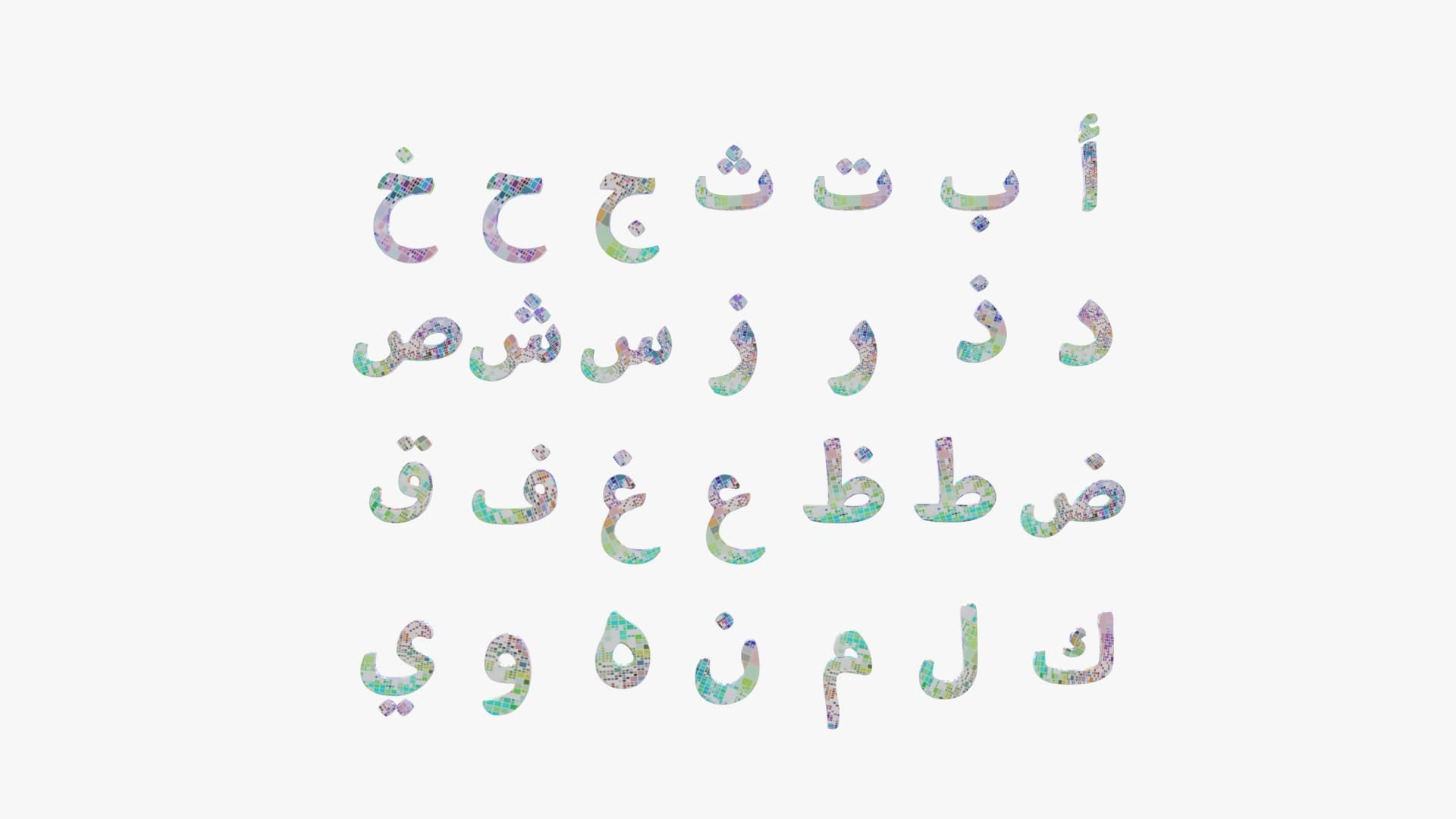
The Arabic Abjad consists of 28 letters, each of which has a unique shape depending on its position in the word. Here’s a quick overview of some of the key letters:

  • Alif (ا) – ‘a’
  • Bā (ب) – ‘b’
  • Tā (ت) – ‘t’
  • Jīm (ج) – ‘j’
  • Ḥā (ح) – ‘h’ (a deep, breathy sound)
  • Rā (ر) – ‘r’
  • Sīn (س) – ‘s’
  • Shīn (ش) – ‘sh’
  • Qāf (ق) – ‘q’ (a unique guttural sound)

Abjad Arabic letters

Each of these letters can take various forms depending on whether it appears at the beginning, middle, or end of a word.

The Significance of Diacritics in Learning Arabic

It is essential for Arabic language learners to comprehend diacritical signs, such as Harakat. Particularly in texts when vowels are omitted, these markings make it clearer how words should be pronounced.  They are essential in religious texts, children’s books, and beginner-level language learning materials, providing a guide for accurate pronunciation.

In addition to the Harakat, there are other diacritical marks that aid in reading and pronunciation:

  • Sukūn ( ْ ): Indicates the absence of a vowel sound.
  • Shadda ( ّ ): Denotes that the consonant is doubled or emphasized.
  • Tanwin ( ً , ٍ , ٌ ): Represents a final “n” sound in specific grammatical contexts.

Why Learning the Arabic Abjad Matters

The Arabic Abjad is not just pivotal to being able to read and write in Arabic but also of huge cultural and religious significance. As the script the Quran is written in, Arabic holds a deep religious meaning for millions of people all over the world. Also, knowledge of the Abjad opens the door to the extensive literary tradition of the Arab world, including poetry, history, and contemporary literature.

Combining your study of the Abjad with an Arabic conversation course can help you become proficient in both written and spoken Arabic, which is important if you want to interact with Arabic-speaking communities or investigate Arabic media. 

Tips for Learning the Arabic Abjad

  • Practice Often: To really get to know the letters and their various shapes, you’ll want to practice regularly.
  • Use Flashcards: Try using flashcards to help you remember how each of the 28 letters looks and sounds.
  • Listen to Native Speakers: Listening to native Arabic speakers is a great way to pick up the right way to say each letter.
  • Pay Attention to Diacritics: Those little marks above and below the letters, called diacritics, are important for correct pronunciation, so be sure to practice them.
  • Talk to Native Speakers: One of the best ways to improve is by chatting with native Arabic speakers. It’ll help you with both saying the words right and writing them correctly.

The Modern Use of the Abjad System

In addition to being essential to Arabic-speaking countries today, the Arabic Abjad has been modified for use with Persian, Urdu, and Pashto, among other languages. Utilized in many different places and cultures, the Abjad has developed into a genuinely worldwide writing system.

Arabizi, a combination of Arabic and Latin letters used for internet communication and messaging, is another evolution of the Abjad in the digital age. This demonstrates how the Abjad can be adjusted to meet the demands of contemporary communication.

Experience the Richness of Arabic with Noor Institute

Noor Institute offers an immersive journey into the Arabic language, combining expert instruction with deep cultural insights. The courses provide a thorough understanding of both the linguistic structure and the historical significance of Arabic. By emphasizing real-world skills and cultural background, Noor Institute provides a truly rewarding experience that vividly brings the beauty of Arabic to light. These best  Arabic classes online are crafted to make your learning process both enjoyable and deeply significant.

Conclusion

The Abjad Arabic, which has a unique consonantal letter system, gives profound understanding of the Arab history, culture, and linguistic beauty. Mastering the Abjad Arabic letters is essential for effective communication and reading proficiency, whether you’re just beginning to learn Arabic or looking to deepen your understanding.

Start your journey with Arabic Abjad adventure today with Noor Institute and dive into the vibrant realm of Arabic language and culture. At Noor Institute, we provide expert-guided courses crafted to guide you through your learning path, assisting you in unleashing the complete potential of Arabic.

Experience the best in Arabic education and begin your learning journey with Noor Institute today. Book your free trial now!

Ramadan 2026 UK: How to Prepare for Ramadan – A Complete Guide

Ramadan 2026 UK: How to Prepare for Ramadan – A Complete Guide

The holy month of Ramadan is approaching, the atmosphere shifts, bringing a deep sense of peace and reflection, making it the time to start setting a plan for Ramadan 2026 . This is a significant time for all muslims in uk & us and around the world that need preparations; not just in terms of food and routine, but in cultivating a heart open to mercy, gratitude, and personal growth.  Muslims consider it a sacred opportunity to purify the soul, grow closer to Allah, and embrace acts of kindness and generosity.

In this blog, we will provide you with the most powerful tips that make you feel completely ready to welcome Ramadan with a stronger physical and mental state and to be fully ready to embrace its blessings.

1- Understanding the True Purpose of Fasting in Ramadan

So how to prepare for Ramadan? First of all don’t get overwhelmed and look beyond the simple act of abstaining from food and drink. Fasting is not just about stopping consumption; it’s about consciously refraining from indulgences and the familiar comforts that often define our daily lives. It’s an act of self-restraint, aimed at breaking free from habitual desires and comforts.

Rather than focusing on food preparation, deciding on drinks, or getting caught up in distractions like television, fasting encourages a deeper spiritual focus. Consider that this is an opportunity to cleanse your body, mind and soul.

2- Fasting in Sha’ban: An Essential Step in Preparing for Ramadan

Fasting in the month of Sha’ban holds special significance in Islam as a preparation for Ramadan. The Prophet Muhammad (peace be upon him) fasted more in Sha’ban than any other month except Ramadan. 

The Prophet (peace be upon him) explained to Usama ibn Zayd that Sha’ban is a month when people’s deeds are presented to Allah, and he preferred for his deeds to be presented while fasting (al-Nasai). Fasting in Sha’ban serves two purposes: it spiritually prepares the body and soul for Ramadan, and it ensures that one’s deeds are presented to Allah while in a state of worship.

By fasting in Sha’ban, Muslims can strengthen their faith, build discipline, and enter Ramadan with renewed devotion and readiness.

3- Strengthening Acts of Worship Before Ramadan Begins

It’s common for some of us to fall short in certain acts of worship at times. However, as we all know, the reward for acts of worship in Ramadan is tremendous. Ramadan serves as a powerful opportunity to draw closer to Allah, and many people use this blessed month to strengthen their relationship with Him.

If you’ve been neglecting some aspects of worship, now is the time to start committing yourself more consistently. The blessings of this time make every act of worship more rewarding, so take this chance to improve and stick to your worship with sincerity. You might consider enrolling in online Quran classes, such as those offered by Noor Institute, to deepen your understanding and connection with the Quran, especially as Ramadan approaches.

This is the time to focus on becoming more consistent in your devotion, so don’t wait until Ramadan begins to take action.

4- Setting Clear and Realistic Goals for Ramadan 2026

Preparing for Ramadan can sometimes feel overwhelming with so much to consider. That’s why it’s important to set clear, achievable goals. Writing down your goals gives you a roadmap for the month and helps you stay focused on enhancing your spirituality.

Start by creating a Ramadan checklist that outlines your goals for the month. The key is to make your goals realistic and manageable.

Having clear, step-by-step goals helps you stay on track and increases your productivity. The ultimate goal is to maintain these practices even after Ramadan ends, turning them into lasting habits that promote consistency and long-term spiritual growth.

5- Increasing Acts of Charity During Ramadan 

Charity is a cornerstone of Islam, particularly during the blessed month of Ramadan. Allah reminds us in the Quran: “You will never attain righteousness until you spend from that which you love.”

Charity can take many forms, whether it’s giving money, food, or even your time to help those in need. The Prophet Muhammad (peace be upon him) said, “The best of people are those who are most beneficial to others.”

During Ramadan, the rewards for charity are multiplied, making it an ideal time to increase your acts of giving.  However, charity should be a consistent practice throughout the year, not just in Ramadan. 

6- Building New Spiritual Habits as You Prepare for Ramadan 

How to prepare for Ramadan doesn’t mean food, drinks and gatherings; Ramadan is a time for spiritual reflection, self-discipline, and devotion. Embracing new spiritual habits during this sacred month can deepen your connection to your faith and bring a sense of peace and fulfillment.

Some habits you might consider incorporating into your daily routine:

    • Praying sunnah and nafilah: consider praying extra Sunnah prayers before or after the obligatory ones. Set aside time for the night prayer (Tahajjud), especially in the last third of the night, for a more intimate connection with Allah.
    • Quran comprehension: Try to increase the amount of time spent reading and reflecting on its meanings.
  • Charity: Consider volunteering your time or skills to support others, especially the needy in your community.
  • Seeking knowledge: Dedicate time each day to learning more about your faith. For example, you could take advantage of Noor institute’s online Islamic courses that can help deepen your understanding of the Quran, Hadith, Islamic history, and more.

7- Engage in zikr regularly

This is a powerful way to bring tranquility to the heart and keep the mind focused on the Divine. The beauty of zikr is that it can be integrated into any moment of the day, turning everyday actions into acts of worship, and becoming an ongoing, spiritual rhythm that aligns your actions with remembrance and faith.

Incorporating zikr as a regular habit not only enhances spiritual awareness but also helps in purifying the heart, relieving stress, and maintaining a state of gratitude.

8- Seeking Sincere Repentance Before Ramadan

As Ramadan approaches, seeking sincere repentance becomes even more important. Repentance involves acknowledging our mistakes, feeling sinful, and making a firm intention not to repeat them. It also means seeking forgiveness from others if we’ve wronged them, so we can enter Ramadan with a clean heart and clear mind.

Allah is always asking us to repent and inshallah accepting our forgiveness. The Prophet Muhammad (peace be upon him) said, “O people, repent to Allah for I repent to Him one hundred times each day” (Muslim). If the Prophet sought repentance regularly, we should do the same.

Repentance purifies the heart and prepares us for worship during Ramadan. It allows us to focus on acts of worship like prayer, fasting, and charity with sincerity. 

9- Understanding the Power of Du’a While

Dua (supplication) is a powerful and essential act of worship that is often underestimated. It is a direct way to connect with Allah, seeking His help, guidance, and forgiveness. As we prepare for Ramadan, we should ask Allah to grant us good health, strong faith, and the ability to perform acts of worship in a way that pleases Him. 

The Prophet Muhammad (peace be upon him) taught us that making dua is not only a form of worship, but a means of drawing closer to Allah. It’s an act of humility, recognizing that we depend on Him for everything. When preparing for Ramadan, one should not forget to ask Allah to make this month a source of spiritual renewal, granting us the ability to fast, pray, give charity, and perform good deeds in the best way possible.

How can Noor Institute supports Your Ramadan Preparation journey?

Noor Institute is committed to supporting your spiritual journey by providing high-quality Islamic education designed for students of all levels and backgrounds. With a team of expert instructors and a well-rounded curriculum, Noor Institute offers courses that span a wide range of topics, including Quranic studies, Islamic history, jurisprudence, and more. The flexible online courses are tailored to meet your unique learning needs, allowing you to study at your own pace and convenience. Noor Institute’s inclusive and accessible approach ensures that anyone, regardless of their prior knowledge or experience, can engage in a meaningful and enriching educational journey, strengthening their connection to Islam and fostering spiritual growth.

Conclusion

Ramadan is a month of blessings, a time when Muslims seek to live spiritually and draw closer to Allah. As you continue searching for the best answer to how to prepare for Ramadan, Noor Institute provides you with a unique answer. With its online courses, Noor Institute offers you the opportunity to deepen your knowledge, strengthen your faith, and enhance your worship during this blessed month. Whether you’re looking to better understand the Quran, Islamic teachings, or the spiritual practices of Ramadan, Noor Institute’s expert-led courses are designed to guide you on your journey, helping you make the most of this sacred time.

Start preparing for Ramadan today! Enroll in Noor Institute’s online courses and live a meaningful Quran-centered life this Ramadan.

Find nearby Islamic centers in the UK & US and Canada:

How Old is the Arabic Language

How Old is the Arabic Language? A Look at Its History

Among the numerous long-standing languages in existence in the entire world today, the Arabic language would without a doubt be amongst the oldest and most influential. Spoken by more than 400 million individuals across various parts of the globe, Arabic is fundamental to communication, literature, and identity in significant areas of the Middle East, North Africa, and beyond. So, how old is the Arabic language? Arabic is not a new language; Arabic has been in existence for thousands of years, and its root is the Arabian Peninsula which has established a solid base in the Islamic world. It has shaped civilizations and fostered intellectual exchange. As a language used for religion, science, and the arts, Arabic has united cultures and been key to advancements in philosophy, mathematics, and literature, leaving an indelible mark on world history.

Types of Arabic exist 

Arabic has evolved into several distinct forms, each serving different purposes. Here are the main categories:

1- Fusha, or classical Arabic

The formal, codified language used in early Islamic poetry, literature, and historical writings is known as classical Arabic. The Quranic Arabic used in the Qur’an is a subset of Classical Arabic, sharing the same Arabic grammar rules but having a distinct style and lexicon. Gaining knowledge of Classical Arabic makes it possible to comprehend a variety of ancient books.

2- Modern Standard Arabic (MSA)

Modern Standard Arabic, or MSA, can be understood as a simplified version of Classical Arabic. MSA is heard in formal contexts, like news bulletins, official literature, and schools inside Arab countries. It is somewhat similar to Classical Arabic but is easier to grasp because its grammatical structures are far less complex.

3- Dialectal Arabic

People in various parts of the world speak Arabic dialects such as Egyptian, Levantine, Gulf, and Maghrebi on a daily basis. Although they differ from Modern Standard and Classical Arabic, they are very useful when speaking with locals.

Position of the Arabic language among other languages 

Among the more than 7,000 languages spoken worldwide, Arabic is a particularly significant one. With about 290 million speakers worldwide, it ranks fifth among the most widely spoken languages and is the official language of 28 countries. Arabic is thriving while many other languages are struggling to survive. Arabic is far from being extinct because of its extensive usage in the Middle East and North Africa, as well as its lengthy history and profound cultural influence. Arabic is unquestionably one of the most important languages in the world due to its historic roots and widespread use.

How old is the Arabic language?

The Arabic language is one of the oldest continuously spoken languages in the world, boasting a history that spans over 2,000 to 2,500 years. Where it exactly got its start is a bit uncertain, but experts mostly agree that it began on the Arabian Peninsula. Some think it came from the northern areas, particularly around Al Hirah during the 4th to 7th century CE, while others believe it started further south in Himyar, a kingdom that was around from 110 BC to AD 525.

The written form of Arabic began to develop in the 4th century CE with the creation of the Arabic script, which evolved from the Nabatean Aramaic script. The oldest piece of writing in Arabic that we know of dates back to 512 CE. As time went on, the Arabic script became more regular and easier to read, especially when dots and little marks called diacritics were added to tell apart letters that looked alike.

By the time the Qur’an was revealed more than 1,450 years ago, Arabic had become well-established and was spreading throughout the area. Today, millions of people worldwide still speak Arabic as a living language.

The Arabic conversation course offered by Noor Institute is a great option if you want to become proficient in everyday Arabic. With an emphasis on real-world conversations, this course equips you with the knowledge and self-assurance to speak clearly in any social or professional setting.

Learn to speak Arabic fluently with Noor Institute 

Noor Institute offers the Best Arabic classes online, offering a fantastic opportunity for anyone interested in learning the Arabic language. With well-structured courses, the institute caters to both beginners and advanced learners, ensuring a clear learning path. Their interactive and engaging lessons enable students to practice speaking, reading, and writing Arabic with confidence. Experienced instructors offer personalized feedback and support, fostering an effective learning atmosphere. With flexible schedules and a thorough curriculum, Noor Institute makes it simple to master Arabic from the comfort of your home.

Conclusion 

In conclusion, How old is the Arabic language is a question that emphasizes its rich historical significance, which stretches back over two thousand years. Arabic, one of the oldest languages still in use today, has flourished and changed over the years while retaining its cultural significance. Its strength and impact are demonstrated by its journey from ancient origins to modern application. Studying Arabic exposes you to a language that has shaped civilizations and is still important in today’s world.

Noor Institute provides an excellent opportunity for learners to embark on this journey, offering expert-led courses that make mastering Arabic accessible and engaging for students of all levels. 

Start your Arabic learning journey today with Noor Institute!

How to convert to Islam online

How to convert to Islam online

Islam is a faith built on profound beliefs, worship, and daily practices. If you’re wondering how to convert to Islam online, the first step is understanding its core principles. Gaining this foundational knowledge ensures a smooth and confident transition into your spiritual journey.

In this guide, we invite you to explore the essential teachings of Islam, helping you embrace the faith with clarity. Join Noor Institute’s welcoming community and discover Islamic courses designed to support and guide you every step of the way.

The Main Islamic Topics for New Converts 

To be ready to convert to Islam online; there are some crucial basic beliefs you need to consider.

  • The Five Pillars of Islam

For new converts to Islam, a key focus is on grasping the five pillars, which are essential to a Muslim’s beliefs and practices. These pillars include:

  • 1. Monotheism (Tawhid)
  • 2. Prayer (Salah)
  • 3. Charity (Zakat)
  • 4. Fasting during Ramadan (Sawm)
  • 5. Pilgrimage (Hajj) for those who can undertake it. 
  • Monotheism

Believing in the oneness of Allah and denying any partners is the first and foremost pillar. This concept holds a significant place in Islamic theology, as it leads to a deeper understanding of Allah’s existence and His perfect attributes. Tawhid also shapes an individual’s character and contributes to societal well-being.

The pillars of monotheism (Tawhid) include associating Allah in supplication, intention, obedience, and loyalty.

  • Fiqh

For those who have recently converted to Islam, Fiqh is essential in guiding how to perform acts of worship correctly, understanding what is permissible (halal) and what is prohibited (haram), and following the teachings of Ahl al-Sunnah wal-Jama’ah. Learning to perform Salah properly is a crucial aspect of Fiqh, ensuring that prayers are conducted with the right method and intention.

What to say to convert to Islam

To convert to Islam, the first and most important step is to recite the Shahada (the declaration of faith). This statement highlightes that there is only one Allah and emphasizes the prophethood of Muhammad. The Shahada is expressed as: “Ashhadu an la ilah ill-Allah, wa ashhadu anna Muhammadan Rasulullah,” which means “I bear witness that there is no god but Allah, and I bear witness that Muhammad is His messenger.”

By reciting the Shahada, a person openly accepts Islam and commits to following its teachings and principles. This declaration signifies the individual’s formal entry into the Muslim community, marking a new beginning and a dedication to a life of faith and righteousness.

Tips to Make Converting Easier

  1. Find Islamic centers that will help you learn about the Basics of Islam. 
  2. Join Islamic community groups and find a nearby mosque; connecting with other Muslims and immersing yourself in an Islamic community will support your journey. 
  3. Seek guidance through online Islamic courses; these courses provide the required support about the basic Islamic topics you need to know. 
  4. Talk to other converts and ask them about their experience and if they face any challenges; this will enable you to deal with any challenges you might face. 
  5. Ask Allah to maintain your willingness and to keep you steadfast in worship.

Basic Practices New Converts Must Understand

  • Prayers (Salah): Salah is the 2nd pillar of Islam and the first thing one will be asked about on the day of judgment. Salah is the daily link between you and Allah and it is obligatory to perform the five prayers of the day at their specific time.
  • Ramadan fasting (Sawm): Fasting also is one of the five pillars of Islam, you need to learn all the details related to fasting, what is prohibited during fasting, who is eligible for breakfast, and why fasting is crucial for all Muslims.
  • Other important acts of worship, include giving charity (Zakat). 

How to Convert to Islam Online with Noor Institute

If you’re searching for how to convert to Islam online, Noor Institute is here to guide and support you on this transformative journey. Our Islamic Studies programs provide a solid foundation, offering key teachings on the Five Pillars of Islam, fiqh, sirah, and hadith in an accessible and engaging way.

Led by knowledgeable scholars, our courses create a welcoming environment where you can deepen your understanding of Islam, strengthen your connection with Allah, and embrace Islamic values with confidence.

Book your free trial today and start your journey toward Islam with Noor Institute!

Frequently Asked Questions

– Can I convert to Islam on my own?

Yes, you can do this by studying Islamic teachings. However, it is better to seek guidance from a professional mentor


– What is the duration to convert to Islam?

Converting takes only seconds; when you say the shahada you become a Muslim. It is an easy and quick process

What Does the Quran Say About Family

Family Life in Islam: What Does the Quran Say About Family?

The family forms the core of personal and societal stability, offering love, support, and emotional security. In Islam, both the Quran and the teachings of Prophet Muhammad (PBUH) stress the vital role of the family. Understanding how to deal with unfair parents in Islam can help foster peace and respect, even in challenging relationships.

In this blog, we’ll explore the Quran’s guidance on family dynamics, offering insight into handling difficult situations with fairness and compassion. This wisdom helps create stronger family bonds, fostering a caring and just society.

Family Objectives and Functions

  • Emotional and Psycho-Social Stability

Families play a crucial role in offering emotional support and fostering a nurturing atmosphere that enhances psychological well-being. Through expressions of love, kindness, and mutual care, families help cultivate mental health and emotional resilience.

  • Socialization and Value-Oriented Education

Families serve as the primary agents of socialization, instilling essential values such as respect, responsibility, and empathy. These values empower individuals to make positive contributions to society, thereby nurturing a cohesive community.

  • Providing Stability

The family acts as a stable foundation for individuals, providing security and consistency in a world that can often feel chaotic. This sense of stability enables individuals to focus on personal growth, career aspirations, and social connections without the weight of uncertainty.

What does the Quran say about family: The Concept of Family in Islam

The family is considered the smallest unit of society as well as a vital building block of human civilization in Islam. Islamic teachings show that families must be nurtured with care, love, and respect, as they are an important basis for the morally as well as socially developed individual. The Quran outlines this importance in numerous verses that emphasize the responsibilities of family members towards each other.

The Prophet Muhammad (peace be upon him) emphasized these values by providing guidance on marriage and family life. He encouraged young people to get married and stressed the importance of choosing a good spouse, as children often take after their parents (Al-Bukhari). This shows that a strong family helps create a fair society, where people are well-educated and taken care of, which helps prevent unfairness.

Additionally, certain chapters of the Quran, like “Al-Talaq” (Divorce), directly discuss family issues, showing that family relationships are important for social harmony. The chapter “Al-Mujadalah” (The Dispute) offers quick solutions to family problems, demonstrating Islam’s practical way of dealing with conflicts within families.

Through these teachings, Islam not only values family relationships but also recognizes their crucial role in promoting a healthy society.

The Role of Family in Society Progress

The family occupies a strategic position in the development of society as it nurtures people for individual and societal development. Core to this role is the function of a family in providing society with healthy children who contribute to caring for their parents in old age and extend their good deeds to them even afterlife through prayers and charity.

Additionally, the family serves as a major institution in shaping competent individuals who contribute to the development of society through knowledge, work, and promotion of virtue while forbidding vice.

Through these efforts, families provide a strong moral and educational base, helping people learn how to play positive roles that help society and the economy grow. Families also help bring people together by building connections based on support, loyalty, and shared beliefs, which are important for keeping society peaceful and united.

By offering Online Quran classes for adults, Noor Institute not only deepens spiritual understanding but also teaches the vital role of family in societal progress. These courses emphasize the importance of strong family bonds, mutual respect, and shared responsibility, helping individuals recognize how these values contribute to a stable, virtuous society.

Role of Family in Supporting Spiritual Development

The family is crucial for helping individuals grow spiritually. It’s usually within the family that people first learn about and start to understand their beliefs, values, and goals. From a young age, kids are introduced to spiritual activities, like religious ceremonies, prayers, or lessons about right and wrong, which help form their ideas about the world and their place in it. The way the family practices these spiritual ideas gives kids a real-life example to follow.

Moreover, families are often the first community where individuals learn to engage with others in a spirit of empathy, cooperation, and love, all of which are integral to spiritual growth. Parents are responsible for guiding children through their questions and doubts, helping them navigate spiritual challenges while encouraging them to cultivate a personal relationship with their faith. 

Through daily practices, shared beliefs, and mutual support, the family consolidates the spiritual base of a person so that the principles of faith, morality, and compassion remain at the core of their lives.

Quarn Verses: What Does the Quran Say About Family

The Quran teaches that family is a key part of human life, stressing the need for love, respect, and support among family members.

Quran Verses About Family Love 

1- “Among His Signs is this, that He created mates for you from yourselves, that you may dwell in tranquillity with them. He also put love and mercy between you. There are lessons in this for people who think.” (Ar-rum)

This verse emphasizes the strong emotional connection of love and mercy that should be between a husband and wife, helping to create peace and calmness in the family.

2- “We have told people to care for their parents. A mother carries a child with much difficulty, and the child is weaned after two years. Be grateful to Me and to your parents: to Me is your ultimate return.” (Al-Ahqaf)

This verse teaches the importance of keeping family ties strong and respecting the care and love parents give.

Quran Verses About Family Values

1- And your Lord ordained that you worship none exept Him and treat your parents with kindness. Whether one or both of them reach old age [while] with you, say not to them ‘uff,’ and do not repel them but speak to them a noble word.” (Al-Isra)

This verse emphasizes the high regard Islam places on respecting and honoring parents, urging children to be patient, gentle, and kind with them, especially in their old age.

2- “And you who believe, it is not lawful for you to inherit of the women by compulsion, neither thrust them hard that you may take away part of that which you have given them, unless they commit an open filthy shame. And share your life with them in a good manner.” (An-Nisa)

This verse promotes fairness and justice between spouses, encouraging mutual respect and kindness.

Gain Deeper Insights into Islam with Noor Institute Courses

Learn how to deal with unfair parents in Islam and explore the Quran’s teachings on family with Noor Institute’s well-designed courses. Our programs provide both foundational and advanced knowledge, focusing on spiritual growth and practical applications of Islamic values.

Led by knowledgeable teachers, our interactive courses help you build a deeper connection with Islam while learning how to handle family challenges with wisdom and compassion.

Begin your learning journey today and sign up for a free trial!

How to Revise Memorized Quran

How to Revise Memorized Quran

Just like any other skill, Quran memorization requires consistent practice to retain it over time. Without regular revision, even the strongest memorization can fade. That’s why many ask, “How to revise memorized Quran effectively?” This guide provides practical strategies to ensure you never forget what you’ve learned.

In this blog, you’ll discover proven techniques and hands-on tips to help you revise and retain your memorized Quran with confidence. Strengthen your connection with the Quran and make your memorization last a lifetime.

Importance of Revising the Memorized Quran

  • Regular revision will prevent you from forgetting over time, revising ensures that what was once memorized remains intact, preserving the hard work invested in the process of memorization.

  • Revising memorized Quran fosters the connection between you, the Quran, and Allah. The Quran is not a book for mere memorization; it is a guide in nature and nourishment for your spirituality. Doing this will maintain spirituality and make the heart conscious and more religious.

  • Ibn ‘Umar (May Allah be pleased with them) reported: The Messenger of Allah ﷺ said: “The parable of one who knows the Qur’an by heart is as the parable of an owner of a hobbled camel. If he remains vigilant, he will retain it; and if he neglects it, it will go away”. Al-Bukhari and Muslim. This emphasizes that regular revision acts as a safeguard against losing the memorized verses.

  • Reviewing the memorized Quran helps enhance the precision of recitation and the understanding of tajweed rules. By regularly revisiting the text, one can continuously improve their pronunciation and adherence to the correct rules.

  • Reviewing the Quran also promotes a better grasp of the verses’ meanings and encourages tadabbur. As one repeatedly studies the text, it becomes simpler to think deeply about its message and consider its lessons.

  • Regular revision of the Quran keeps one in contact with the book of Allah as an act of worship. This, whether by performing salah or personal recitation, allows the revision to bring verses of the Quran into your daily activities. This will lead to a point where one will always remember and draw closer to Allah.

How to Revise Memorized Quran: Useful Tips

  • Spot the weak areas: Pay attention to Surahs or verses that you find hard or have forgotten. Recognizing these common challenges helps you focus on the areas that need more work.

  • Create a Structured Plan: Make a plan that works with your routine. Set aside time each day to follow this plan.

  • Use Audio Materials: Listen to skilled Quran readers to help improve your pronunciation and reading.

  • Active Recalling: Recite memorized verses aloud from memory without referring to the text.

  • Seek Guidance and Support: Join Quran classes, which will help you learn Quran online at your pace. A supportive community provides accountability and valuable feedback to enhance your revision.

  • Incorporate Visual Aids: Utilize Quranic flashcards, charts, or mnemonic devices to help visualize and strengthen memorization. Seeing the verses can make them easier to remember.

  • Regular Review Sessions: Dedicate specific times each day for revision. Consistency is essential for improving retention over time.

  • Memorize in Context: Explore the broader context of each verse by reading Tafsir or listening to explanations. This deepens your understanding and appreciation of the Quran’s message.

  • Set Milestones: Divide your revision goals into small, achievable milestones. Celebrate each success with acts of gratitude and reflection to maintain motivation.

  • Use Various Learning Strategies: Employ a combination of recitation, writing, listening, and teaching to engage different sensory pathways. Mixing up your approach keeps the process lively and more effective.

Techniques for Long-term Retention

  1. Create a Quran revision schedule that aligns with your daily prayers, allowing you to recite different surahs during each Rak’ah. This approach enables you to review multiple Surahs each day while keeping the spiritual essence of Salah intact.

  2. Aim to revise one or two Surahs each day to keep your workload manageable and prevent feeling overwhelmed. On busier days, concentrate on shorter Surahs, and reserve longer ones for weekends or holidays when you have more time.

  3. Organize the Surahs you’ve memorized into three categories: those you are confident with, those that need some revision, and those that you find challenging. Shift your focus regularly, spending more time on the difficult Surahs while consistently revisiting the easier ones. This structured method promotes steady progress across all Surahs.

  4. Find a study partner to collaborate with. Schedule regular sessions to recite Surahs to one another, providing feedback and corrections.

How to Revise Memorized Quarn Based on Juz

Many people create a schedule to review three parts of the Quran each day: one after morning prayers (Fajr), another after afternoon prayers (Asr), and the last one after evening prayers (Ishaa). This organized plan lets them go through the whole Quran in only ten days, which is a good choice for those who have time to be dedicated.

For people with more hectic lifestyles, reviewing two parts of the Quran each day is a useful option, allowing them to finish in 15 days. This approach lets individuals pick a study pace that fits their daily responsibilities. Also, including revision in daily prayers can help improve memory, since reciting memorized parts during prayer strengthens learning.

Overall, the main thing is to create a regular and doable routine that works with one’s lifestyle, ensuring keeping up with the Quran regularly.

How to Memorize the Quran At Home?

  • Start with Juz Amma as it contains short surahs easier to memorize, making it a great starting point.
  • Establish a daily routine to recite and memorize. Set aside specific times each day for studying the Quran, making it a natural part of your routine.
  • Begin with small sections to ensure you can stick with it. Break the Surahs into manageable parts to prevent feeling overwhelmed. Concentrate on memorizing a few lines or a single ayah at a time, and gradually increase the amount as your confidence grows.
  • Listen frequently to your favorite sheikh to help you memorize accurately. Regular listening will familiarize you with the Quran’s rhythm and tone, making memorization easier.
  • Incorporate visual aids. Using visual learning tools can enhance your retention of the words and help you connect with the meaning of each verse.
  • Join Online Quran memorization classes. These classes offer personalized, and provide tailored instruction that accelerates your progress, helping you stay motivated.

The importance of seeking guidance to be a Hafiz

Indeed, it is a noble and spiritual journey to be a Hafiz, and this requires regular, unstoppable effort and discipline, reinforced with proper guidance. Seeking guidance secures correct pronunciation, or tajweed, deeper meanings of the verses, and effective memorization techniques. Having a mentor or an institution offering structured learning can make a world of difference in being able to retain and recite the Quran with accuracy. This will help you to be more connected to the Quran and carry out this responsibility more confidently and with high regard.

Noor Institute is a dedicated entity focused on assisting students in learning to memorize the Quran. They offer complete courses that teach correct reading, pronunciation, and memorization methods, as well as Arabic lessons. Their skilled teachers help students with individual learning plans, ensuring they improve steadily and correctly. Noor Institute also provides a helpful community that encourages spiritual development and dedication to the Quran.

How to Avoid Forgetting Your Hifz?

If you regularly forget some parts while you revise memorized Quran, it’s helpful to find a way to prevent this. Begin by figuring out which parts you forget when you memorize. After you know these parts, spend at least a month going over one section of the Quran each day, paying extra attention to the parts you find difficult to help you remember them better.

Slowly, increase the number of sections you review each day, starting with two, then three, and finally up to five sections, reading one after each prayer.

You can also listen in all your free time, during cooking, driving, and other such activities, you should listen to the recitation of the forgotten parts. This passive reinforcement helps in solidifying your memorization.

Also, try to make some time during the day to recite what you already know.

With dedication and consistency, you can enhance your Hifz and minimize forgetfulness.

Master How to Revise Memorized Quran with Noor Institute

Memorizing the Quran is an achievement, but consistent revision is key to retaining it for life. If you’re wondering how to revise memorized Quran effectively, our guide provides practical strategies to help you strengthen your memorization with ease.

Discover expert-backed tips to ensure you never forget what you’ve learned. Start applying these proven techniques today and maintain a lifelong connection with the Quran.

Book your free trial now! and take your Quran revision to the next level!

How to Revise Memorized Quran: Frequently Asked Questions

  • What is the expected time to revise memorized Quran?

The expected time varies from one person to another, based on the time one could allocate for revision.

  • How to revise memorized Quran quickly?

To revise memorized Quran in a shorter time, you should prepare a revision planner that highlights how many ayahs you will revise each day, coupled with time slots allowing you to focus on revision. This helps keep track and accelerates the process of revision.

Learn Quran at home

Effective ways to learn Quran at home

Learning the Quran at home can be a deeply fulfilling journey, offering not just memorization but spiritual growth, self-discovery, and a closer connection with Allah.

At Noor Institute, we provide a convenient and enriching way to learn the Quran at home. Our engaging lessons, led by expert instructors, go beyond rote memorization and help you truly understand the essence of each verse. As you explore the Quran, its divine light will guide your life, enhancing your understanding and drawing you nearer to its core.

In this blog, we’ll show you how to learn the Quran at home with Noor Institute, using a step-by-step approach designed for success.

Revised Steps to Help You Learn Quran at Home

In your quest to learn the Quran from the comfort of your own home, maintaining consistency and patience is crucial Learning the Quran is a lifelong journey, and progress may unfold gradually. Remain dedicated, have patience with yourself, and have faith in the process. The rewards of delving into the study of the Quran are abundant and far-reaching.

– Find a Dedicated Learning Space:

To start, set aside a tranquil and comfortable area within your home solely dedicated to your Quran studies. Ensure this space is free from distractions and fosters an atmosphere conducive to learning.

– Embrace the Mushaf:

Once you have your space, obtain a physical copy of the Quran with clear Arabic text – the easiest way to learn Quran at home. Additionally, consider translations in your preferred language for deeper understanding. You might explore online versions or Quran apps for convenience, but always remember the value of holding the physical Mushaf.

– Begin with Fundamentals of Tajweed:

Now that your space is set and you have your Mushaf, initiate your learning journey by familiarizing yourself with the fundamental principles of Tajweed – the correct recitation of the Quran. At Noor Institute, we offer online resources, tutorials, and dedicated books for learning Tajweed from the comfort of your home.

– Engage in Regular Recitation:

Moving forward, practice reciting the Quran regularly, aiming to implement the rules of Tajweed that you have learned. Start with shorter chapters or verses, gradually progressing to longer sections as your proficiency improves. Take advantage of audio recitations available online to enhance your pronunciation and rhythm.

– Seek guidance from qualified teachers:

Consider enrolling in Noor Institute for Quran online courses or seek guidance from our qualified Quran teachers who offer remote learning opportunities. They can provide valuable feedback, correct your recitation, and offer additional support.

– Use Audio Recitation:

Enhance your pronunciation, rhythm, and intonation by listening to audio recitations of the Quran by renowned reciters. Follow along with the recitation as you read the verses, allowing the melodic tones to guide your recitation.

– Make a Study Schedule:

Create a consistent study schedule that aligns with your daily routine. Set aside dedicated times for Quran study, making it a regular and habitual part of your day.

– Memorize Selected Verses: 

Choose Verses that are valuable to you personally or that are often Read during prayer and worship. Repeat the verses aloud to yourself regularly to help you remember them and strengthen your bond with them.

How to Recite the Quran Effectively at Home

Quran recitation has the power to illuminate your heart, soul, mind, and tongue with the divine light of Allah (SWT). Those who recite the Quran with sincerity and adherence to its rules are promised abundant rewards in this life and the hereafter.

It’s crucial to recognize that reciting the Quran correctly extends beyond mere knowledge of Arabic. Quran recitation requires adherence to specific rules and regulations for proper Tilāwa. Therefore, as you begin your journey to learn Quran at home, understanding the unique nature of Quran recitation and the importance of following prescribed rules is vital.

At Noor Institute, we offer comprehensive Quran recitation lessons for all ages. Our experienced tutors will guide you in the correct pronunciation of verses, teach you the rules and principles of recitation, and help you develop proficiency in Quranic phonetics. Through a structured curriculum, starting with shorter Surahs and progressing to longer ones, we aim to help you recite the entire Quran flawlessly without errors.

Learn Quran at Home with Tajweed at Noor Institute

Reciting the Quran correctly requires more than just knowing Arabic. It’s not just about reading the text; it requires understanding and following specific rules. Reflecting on this is crucial because Quran recitation is unique and has its own set of regulations for accurate Tilāwa.

At Noor Institute, we provide a Quran Tajweed Course that allows you to learn Quran at home and master the art of Quran recitation with Tajweed. Our professional teachers will guide you or your children in mastering the art of Quran recitation with Tajweed from the comfort of your home. Your assigned Quran teacher will provide continuous guidance and correction, ensuring you excel in applying Tajweed. By the end of the course, you’ll have the ability to recite the Quran flawlessly, following the same method as Prophet Muhammad (PBUH).

Benefits of Learn Quran at Home with Noor Institute

Learning the Quran at home with Noor Institute offers a multitude of benefits that make it an ideal choice for individuals seeking to deepen their understanding of the Quran.

  1. Flexibility in Learning:
    Learning Quran at home eliminates the necessity to follow a set schedule or commute to an institution. With Noor Institute, you can easily integrate Quran study into your everyday schedule since you are free to select your study hours.

  2. Personalized Learning:
    Noor Institute offers individualized instruction based on your specific requirements. Our courses are designed for students of various skill levels, so no matter where you are in your learning process, you will get the help and support you need.

  3. Qualified Instructors:
    At Noor Institute, you have access to highly qualified instructors knowledgeable in Quran studies. These instructors bring their expertise and passion for teaching to create an engaging and enriching learning environment.

Start Your Quran Learning Journey at Home with Noor Institute

In conclusion, with Noor Institute, the best online platform for Quran courses, learning the Quran at home has never been easier. Understand the meanings of Quranic verses and apply them in your daily life to fully grasp this spiritual journey. With the right resources and tips, you can quickly and easily start learning the Quran. Begin your journey today and share this knowledge with your children!

Frequently Asked Question

  • What are the first steps to learn Quran at home?

The first step to learn the Quran is to start with the basics of learning the Arabic alphabet and pronunciation (Tajweed).

Focus on short, beginner-friendly Quran verses first, Listen to Quran recitations, read daily, and join online/local reading groups for practice and motivation, and finally Consider Noor Institute online courses and their qualified teachers for personalized learning and feedback.